We all know the feeling. It’s minus five at home. The plane doors open, and warm air greets you. Your shoulders relax, your jacket comes off, and the gloomy gray skies of Great Britain feel far away. That’s exactly what awaits when you land in the Canaries between November and March. It’s a reliable choice if you’re swapping the winter blues and the same old routine for blue skies and new faces. With around 300 days of sunshine a year, daytime temperatures in the low 20s, and sea temperatures still warmed by summer, it’s pleasant enough for a swim. And it’s just four hours from the UK. Take a closer look at these five sun-soaked islands and discover the different ways you can experience them this winter.
Destinations
The Canary Islands in the spotlight this winter
Volcanic peaks or golden dunes, mountain trails or a sun lounger by the sea: which Canary Island is right for you? Here’s our guide to all five.
TENERIFE
Things to do
Ride the cable car to the summit of Mount Teide, Spain’s highest peak, in UNESCO-listed Teide National Park. Back at sea level, wander the cobblestone streets and admire the carved wooden balconies of La Orotava, or explore La Laguna, the island’s historic former capital. A boat trip beneath the Los Gigantes cliffs gives you the chance to spot pilot whales and dolphins.
Cuisine to try
Ropa vieja is a comforting, slow-cooked stew made with shredded meat and chickpeas. Gofio, a toasted flour, appears in everything from soups to desserts drizzled with honey. No meal is complete without papas arrugadas, small, wrinkled potatoes served with red or green mojo sauce.
Why visit in winter
With average temperatures of 15–22°C from November to March, Tenerife is ideal for winter sun. Stay in Puerto de Santiago, with panoramic views of Los Gigantes, or Costa Adeje, close to the Blue Flag beaches of Playa Troya and Playa Enramada. Walkers can join Walking in Tenerife & La Gomera, and February brings the Santa Cruz carnival.
Off the beaten path
Masca is a tiny village tucked into a dramatic gorge, reached by a winding mountain road. In the northeast, Anaga Rural Park is home to ancient laurel forests and quiet hamlets that feel a world away from the resorts. For a change of scene, take a day trip to neighboring La Gomera.


GRAN CANARIA
Things to do
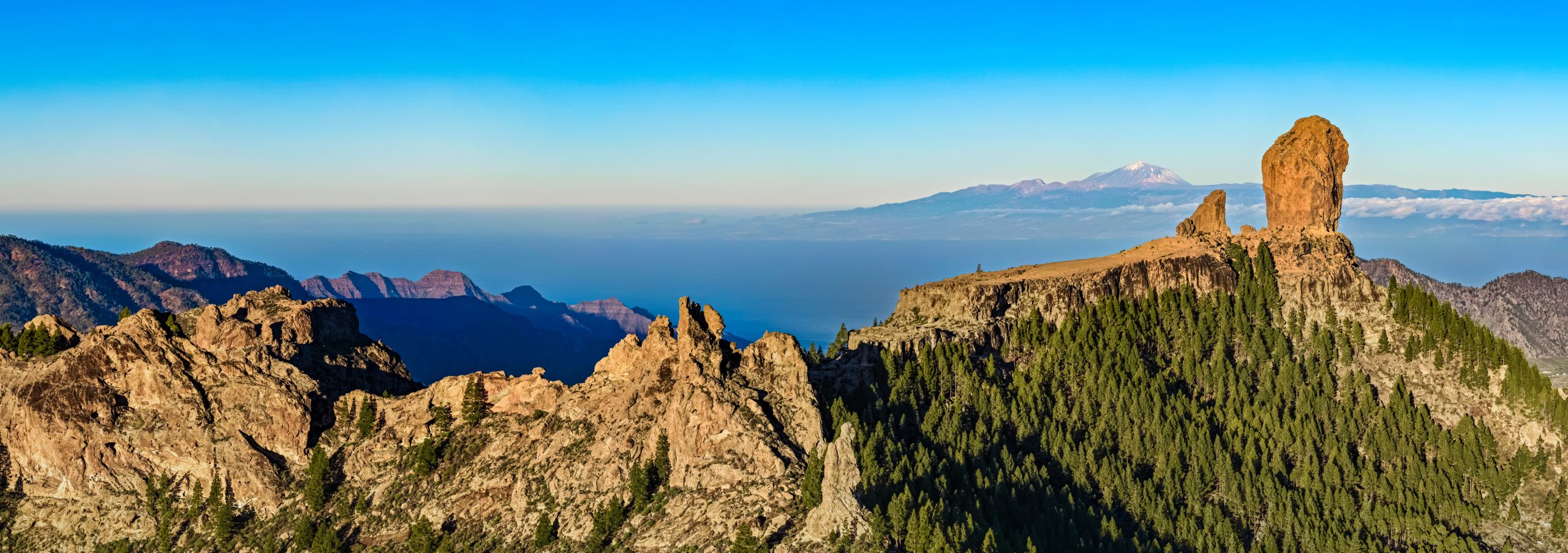
Stroll among the protected golden dunes of Maspalomas, or relax on Las Canteras, a long, sandy urban beach. In Las Palmas, the old quarter of Vegueta is home to the Catedral de Santa Ana and Columbus House. Inland, visit Tejeda and hike to Roque Nublo, the island’s famous rock monolith.
Cuisine to try
Sancocho, salted fish with potatoes and mojo, is a local favorite. So are papas arrugadas, cooked in seawater and served with vibrant mojo verde. Save room for something sweet, too: Tejeda is known for its almond treats.
Why visit in winter
Average temperatures of 15–22°C from November to March, along with almond blossoms in late January and February, make this a lovely time to visit. Choose Gran Canaria Winter Sun or Gran Canaria All Inclusive for a relaxing stay, Gran Canaria Walking for four guided hikes, including Roque Nublo and the caldera, or Gran Canaria Winter Golf.
Off the beaten path
Bandama Caldera is a volcanic crater you can walk all the way around. Nearby, Teror is a hilltop town with a grand basilica, while the Risco Caído cave dwellings near Artenara offer a glimpse of the island’s ancient past.


LANZAROTE
Things to do
See the Fire Mountains of Timanfaya National Park, where food is grilled over volcanic heat. The artist César Manrique left his mark across much of the island. His creations include Jameos del Agua and the Cactus Garden. Take a guided walk through the Cueva de los Verdes lava tube, then unwind in the sheltered coves of Papagayo.
Cuisine to try
Sancocho with mojo sauce and papas arrugadas are staples here, as they are on the other islands. Pair them with a glass of Malvasía wine from La Geria, where vines grow in hollows dug into the black volcanic ash.
Why visit in winter
Lanzarote averages around 18°C from November to March. For winter sun, choose Playa Blanca or Puerto del Carmen. Lanzarote Walking includes four guided hikes that take in La Corona volcano, the Famara cliffs, Caldera Blanca, and La Graciosa. Golfers can join Lanzarote Golf.
Off the beaten path
Take the ferry from Órzola to the quiet island of La Graciosa, where sandy tracks take the place of roads. Haría, the valley of a thousand palms, is a peaceful place to stop. On Sundays, the old capital of Teguise comes alive with its market.


FUERTEVENTURA
Things to do
Explore the white dunes of Corralejo Natural Park, or unwind on the seemingly endless beaches of Jandía. Inland, Betancuria was the first capital of the Canary Islands. At the Sotavento lagoon, watch kitesurfers and windsurfers skim across the water.
Cuisine to try
Majorero goat’s cheese is the island’s protected specialty and well worth seeking out. Gofio is served alongside meat or fish, and in Corralejo, it’s hard to beat fresh fish by the harbor.
Why visit in winter
At around 20°C, Fuerteventura is the warmest of the five islands in winter. Stay in Corralejo, with optional island tours and catamaran trips, or in quieter Costa Caleta. Walkers can join Fuerteventura Walking, and golfers can join Fuerteventura Winter Golf.
Off the beaten path
Take a boat trip to Isla de Lobos and walk around the island, or visit the ancient sea caves at Ajuy. For a true wilderness experience, head to Cofete, a remote, wild beach backed by mountains.


LA PALMA
Things to do
Visit Roque de los Muchachos, La Palma’s highest point, and its world-class observatory, then hike in the vast Caldera de Taburiente National Park. Back in the capital, wander the streets and admire the balconies of Santa Cruz de La Palma.
Cuisine to try
Queso palmero is a smoky goat’s cheese, and potaje de trigo is a hearty wheat stew. For dessert, try bienmesabe, an almond treat, or traditional rapadura sweets.
Why visit in winter
La Palma averages around 18°C from November to March, making it ideal for exploring on foot. This island is made for walkers, with otherworldly lava fields to cross along the Cumbre Vieja ridge. La Palma Walking is an ideal way to experience it.
Off the beaten path
Los Tilos is a primeval laurel forest with waterfalls. At the island’s southern tip, Fuencaliente has geometric salt flats and a lighthouse. You can also follow the Ruta de los Volcanes, a ridge hike along the island’s volcanic spine.
Whichever island you choose and however you like to spend your days, traveling with Solos means you won’t be on your own. You’ll join a friendly group of fellow solo travelers, with your own room guaranteed and no single supplements. A Solos Tour Leader will take care of the details, so you can focus on the good stuff: the walks, the matches, the long dinners, and the conversations that continue well after dessert. The Canaries may be an old favorite, but they’ve never felt quite so fresh. Maybe this is the winter you rediscover them with us.