How to prioritizeyourself on Self CareDay
Celebrate Self-Care Day by prioritizing your own well-being.

Why the most nourishing thing you can do might surprise you
There's a version of self care that gets talked about a lot. The bath with the candles. The early night. The phone face-down on the kitchen counter while you make something slow for dinner. These things are good. They're genuinely good. But they're also, if we're honest, a little lonely.
Because here's what the wellness industry doesn't always say out loud: human beings are not designed to restore themselves in isolation. We are wired, at a biological level, for connection. For eye contact across a table. For the particular comfort of being in a room full of people who are glad you're there.
Self care, properly understood, isn't just about rest. It's about replenishment. And some of what depletes us most quietly—the low hum of loneliness, the background noise of feeling unseen—can't be fixed with a face mask or a meditation app.
International Self Care Day falls on July 24th each year. The date isn't arbitrary—7/24 was chosen as a reminder that self care should be practiced 24 hours a day, 7 days a week. Not an annual gesture. A way of living. And it's a useful prompt to ask yourself an honest question: what do I actually need? Not what you should need, or what looks after you on paper. What genuinely fills you back up?
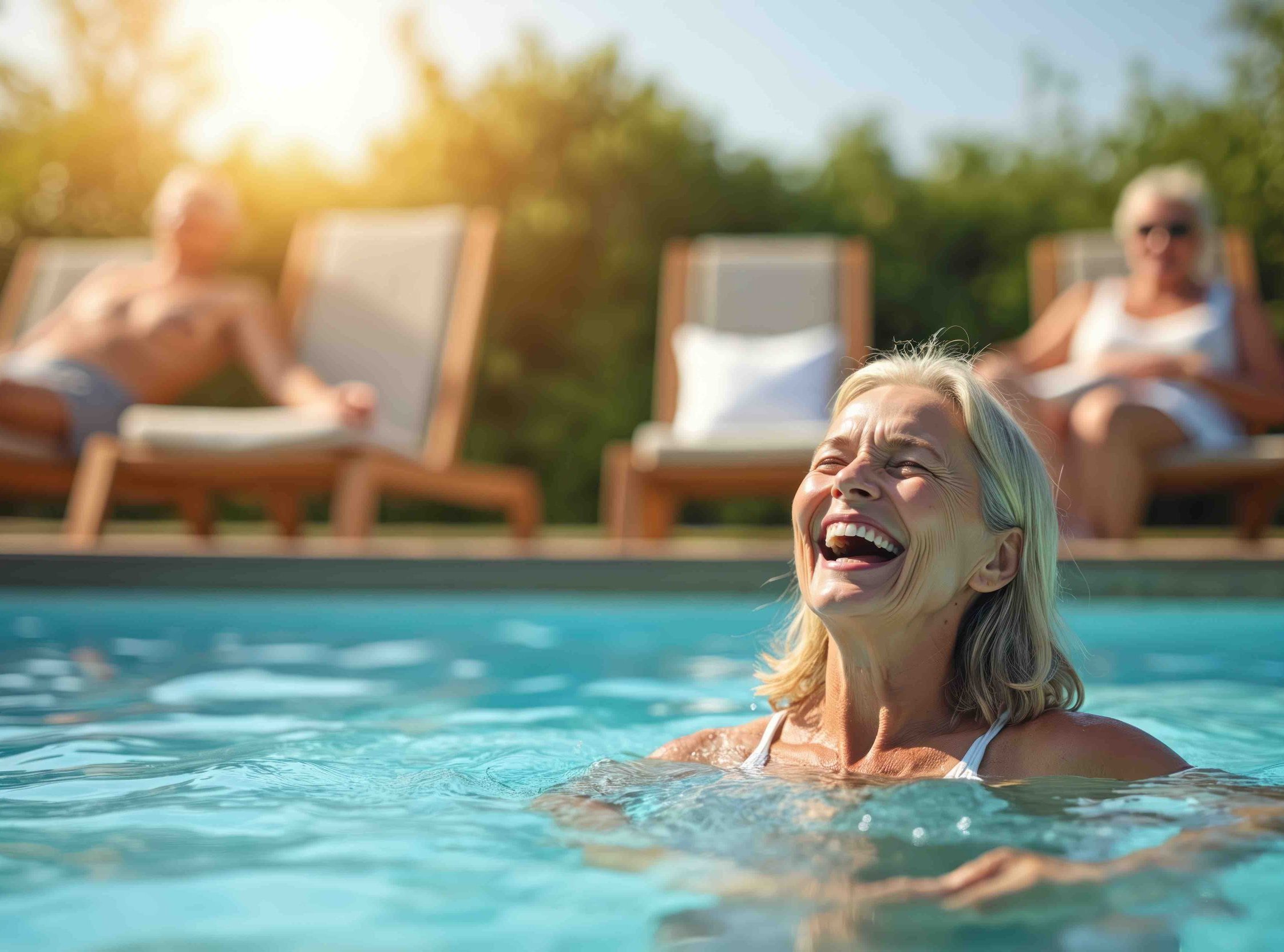
For many people, the answer involves other people. A conversation that goes somewhere unexpected. Laughter over a shared meal with someone you'd never otherwise have met. The particular lightness that comes from being somewhere with no agenda and no performance—just the day, and the people in it.
The science, it turns out, agrees. Research shows that travel measurably reduces cortisol — the body's primary stress hormone — helping to shift the nervous system out of the state of low-level alert that most of us have simply learned to live with. And the Framingham Heart Study, one of the longest-running cardiovascular studies ever conducted, found that women who holiday at least twice a year are significantly less likely to develop heart disease than those who take a break once every six years or less. Travel isn't an indulgence. The evidence suggests it's closer to medicine.
Travel, at its best, offers all of this. Not the rushed, box-ticking kind—but the kind where you have space to breathe, to notice, to let the days unfold a little more slowly than usual. Where you're not managing anyone else's experience, or compromising on where to eat, or pretending to be more energetic than you feel. Where, for once, you don't have to be anything other than present.
Our wellness-focused trips are built around exactly that. Small groups of people who've chosen, independently, to invest in themselves—and who tend to find that the return comes sooner than they expected. A walking trips that turns out to be less about fitness and more about how good it feels to move through a landscape with no particular agenda. A retreat-style break where the conversation over dinner is the thing you remember most. It's not therapy. It's not a program. It's just what happens when you remove the noise, put yourself somewhere new, and let other people in.
So this July 24th, however you choose to mark it—whether that's a quiet morning, a long walk, an early night, or something bigger—try asking yourself what you'd do if you really, genuinely put yourself first. Not the dutiful version. The true one. You might surprise yourself with the answer.